
Swollen Feet Comfort Guide
Best Shoes for Swollen Feet: What to Look for When Your Feet Need More Room
If your feet feel fuller, tighter or more sensitive later in the day, the right footwear can make everyday walking feel less restrictive. This guide explains what to look for in shoes for swollen feet, including toe room, stretch materials, width options, cushioning and fit.

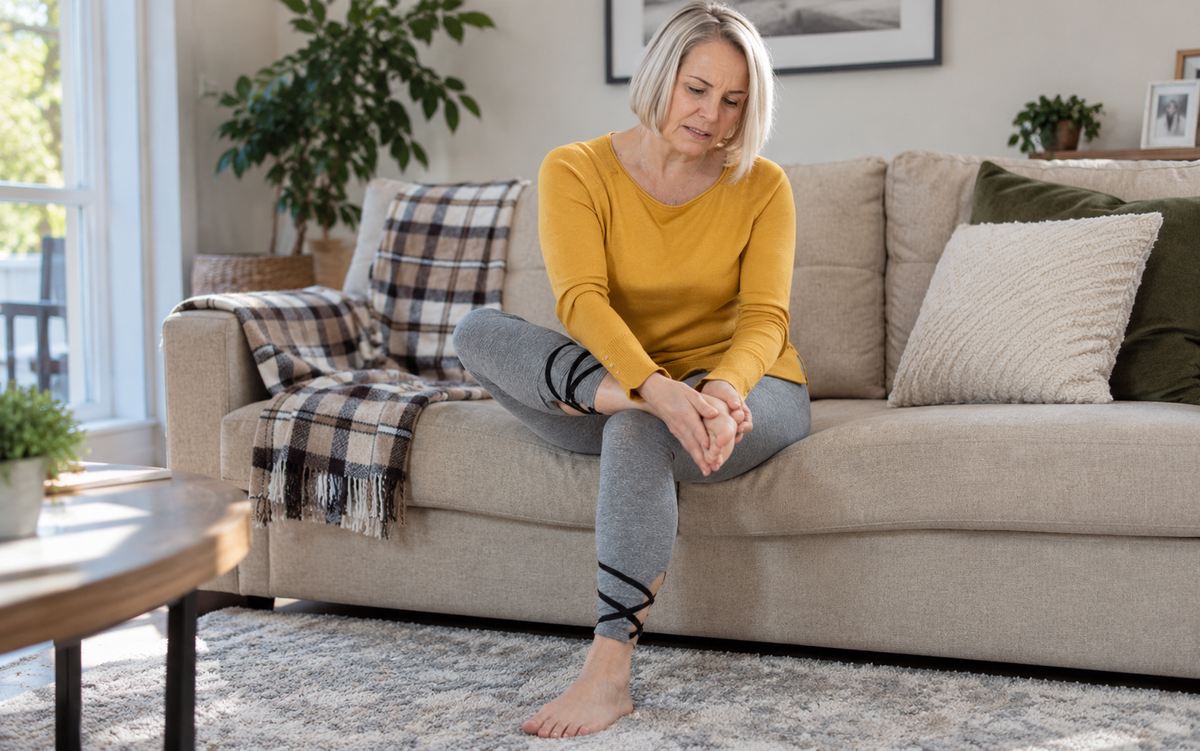
Foot and ankle swelling can happen for many reasons. Some people notice mild swelling after long periods of standing or sitting, during travel, in warm weather or as the day goes on. In other cases, swelling may be related to an injury, medication or a medical condition.
Footwear does not treat the cause of swelling. But when feet temporarily take up more space, a rigid or narrow shoe can feel increasingly uncomfortable. A softer, roomier shoe can reduce the feeling of pinching and give the forefoot more usable space.
If you are specifically looking for a softer walking-shoe fit, you can also explore our walking shoes for wide or fuller-feeling feet or browse the full Tiosebon walking shoes collection.
Why Do Feet Sometimes Swell More Later in the Day?
Feet and ankles are in the lowest part of the body for much of the day. Long periods of sitting or standing can contribute to fluid collecting in the lower legs and feet, which is one reason some people notice that shoes feel tighter in the afternoon or evening.
Heat, long journeys, pregnancy, some medicines and a variety of health conditions can also be associated with swelling. Because there are many possible causes, recurring or unexplained swelling is worth discussing with a healthcare professional rather than assuming it is only a footwear issue.
From a footwear perspective, the practical challenge is simple: a shoe that feels fine in the morning may feel restrictive when the foot takes up more space later.
7 Features to Look for in Shoes for Swollen Feet
1. A roomy toe shape
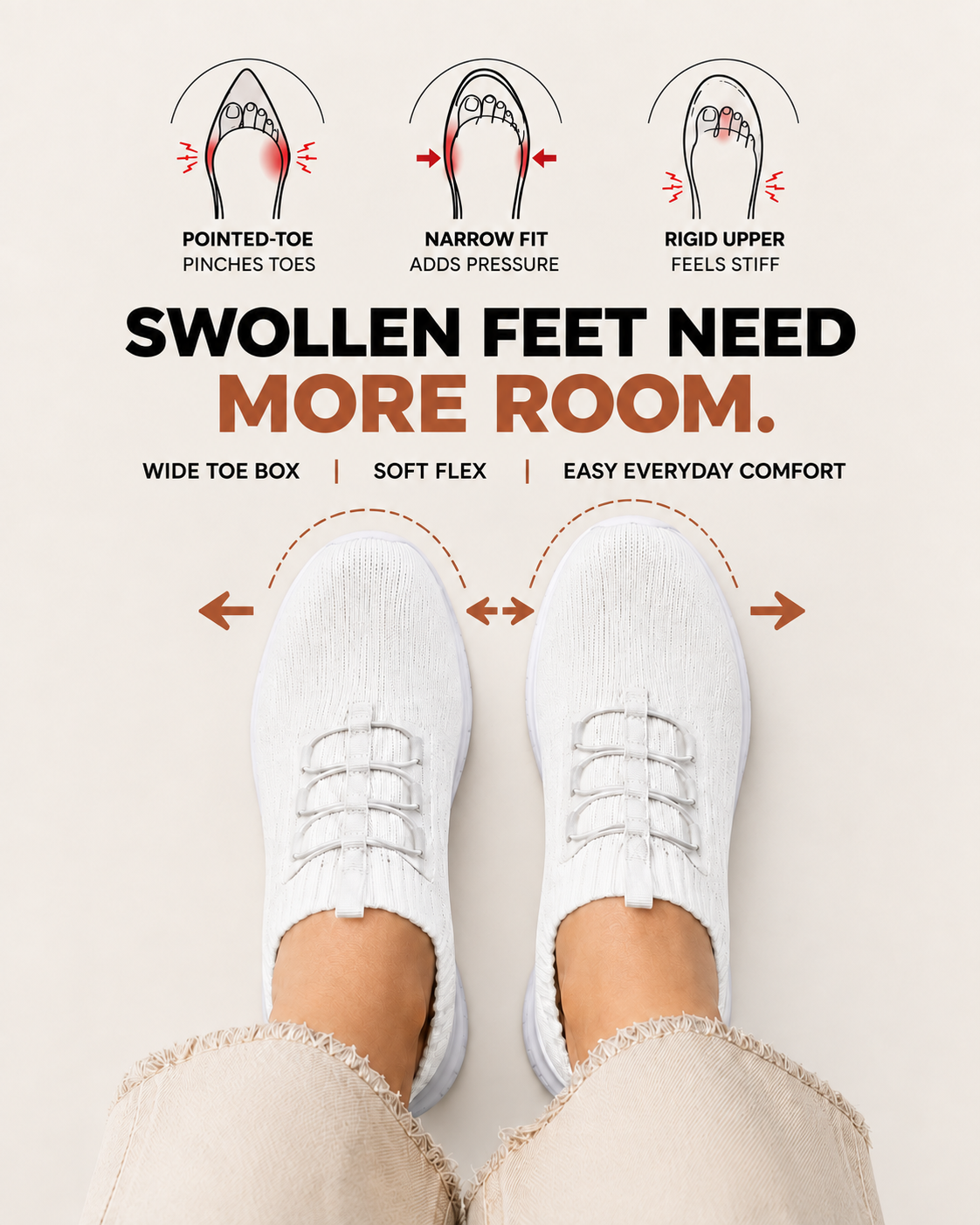
Start with the front of the shoe. Your toes should be able to rest naturally without being pressed together or pushed against the upper. A rounder or wider forefoot shape often gives the foot more usable space than a sharply tapered toe.
Roomy does not mean oversized. A shoe can have generous toe space while still holding the heel securely.
2. A soft, stretchable upper
Rigid uppers hold a fixed shape. Knit and stretch-mesh constructions can adapt more easily to small changes in foot volume, which may make them feel less restrictive when the top or sides of the foot feel fuller.
This is one reason many people prefer breathable knit walking shoes for long days, travel and everyday errands.
3. Standard and wide-fit choices
If width is the main problem, simply going up a full shoe size may create unnecessary heel movement. A style offered in a true wide fit can provide extra room across the forefoot without making the entire shoe excessively long.
The Tiosebon® Strider - Cruise is available in standard and wide-fit options, making it easier to choose the amount of room that suits your foot shape.
4. Flexible cushioning
A soft footbed and lightweight cushioning can make hard floors feel less harsh during walking or standing. The goal is not maximum softness at any cost; the shoe should still feel stable underfoot.
5. A collar that does not dig in
Pay attention to the opening around the ankle and top of the foot. A soft collar can reduce concentrated pressure, especially when your feet feel fuller later in the day.
6. Breathability
Warm feet can feel more uncomfortable inside enclosed shoes. Airflow-friendly knit or mesh materials can help create a lighter wearing experience during long workdays, warm weather and travel.
7. Low overall weight
Heavy footwear can feel tiring during everyday movement. Lightweight construction is especially useful when your routine includes work, commuting, shopping, travel or extended periods on your feet.
Why Stretch Knit Can Feel More Forgiving When Feet Feel Fuller
Traditional structured shoes are built to keep a fixed silhouette. That can be useful for formal styling, but it also means the material may resist changes in foot volume.
A knitted upper behaves differently. The material can flex locally around the forefoot and top of the foot while the outsole and heel structure continue to provide the basic shape of the shoe.
For people who notice mild day-to-day or morning-to-evening changes in fit, this adaptability can feel more comfortable than a stiff upper. Fit still matters, so stretch should not be used to compensate for a shoe that is fundamentally too small.
If this is your main priority, see the Konhill wide-toe walking shoe guide for styles designed around a softer, less restrictive fit.
Should You Buy a Bigger Size If Your Feet Swell?
Not automatically. Going up in length may solve one pressure point while creating another problem, such as heel slipping or an unstable fit.
A better approach is to identify where you actually need room. If the pressure is mainly across the forefoot, look for a wider toe shape, stretch upper or wide-fit option. If the top of the foot feels tight, a softer or more adjustable upper may help.
If your feet commonly feel fuller later in the day, try measuring them when they are closer to their usual larger size rather than relying only on an early-morning measurement. Measure both feet and use the longer measurement as a reference.
You can compare measurements with the Konhill size guide before choosing a size.
Before ordering, check:
- Do your toes have space to rest naturally?
- Is the widest part of your foot aligned with the widest part of the shoe?
- Does the upper feel secure without pressing firmly into the top of the foot?
- Does the heel stay in place without rubbing?
- Does the product offer a wide-fit option if you need additional forefoot room?
Best Shoes for Swollen Feet After Standing All Day
If your feet feel fuller after a long workday, prioritize a combination of usable toe space, a flexible upper, cushioning and a secure heel. The shoe should feel supportive enough for repeated walking without creating obvious pressure around the forefoot.
This is particularly relevant for jobs that combine standing and frequent movement, such as teaching, retail, service work and some healthcare roles.
For a broader comparison of footwear for long shifts, read our guide to shoes for teachers and nurses who spend all day on their feet .
Best Shoes for Swollen Feet While Traveling
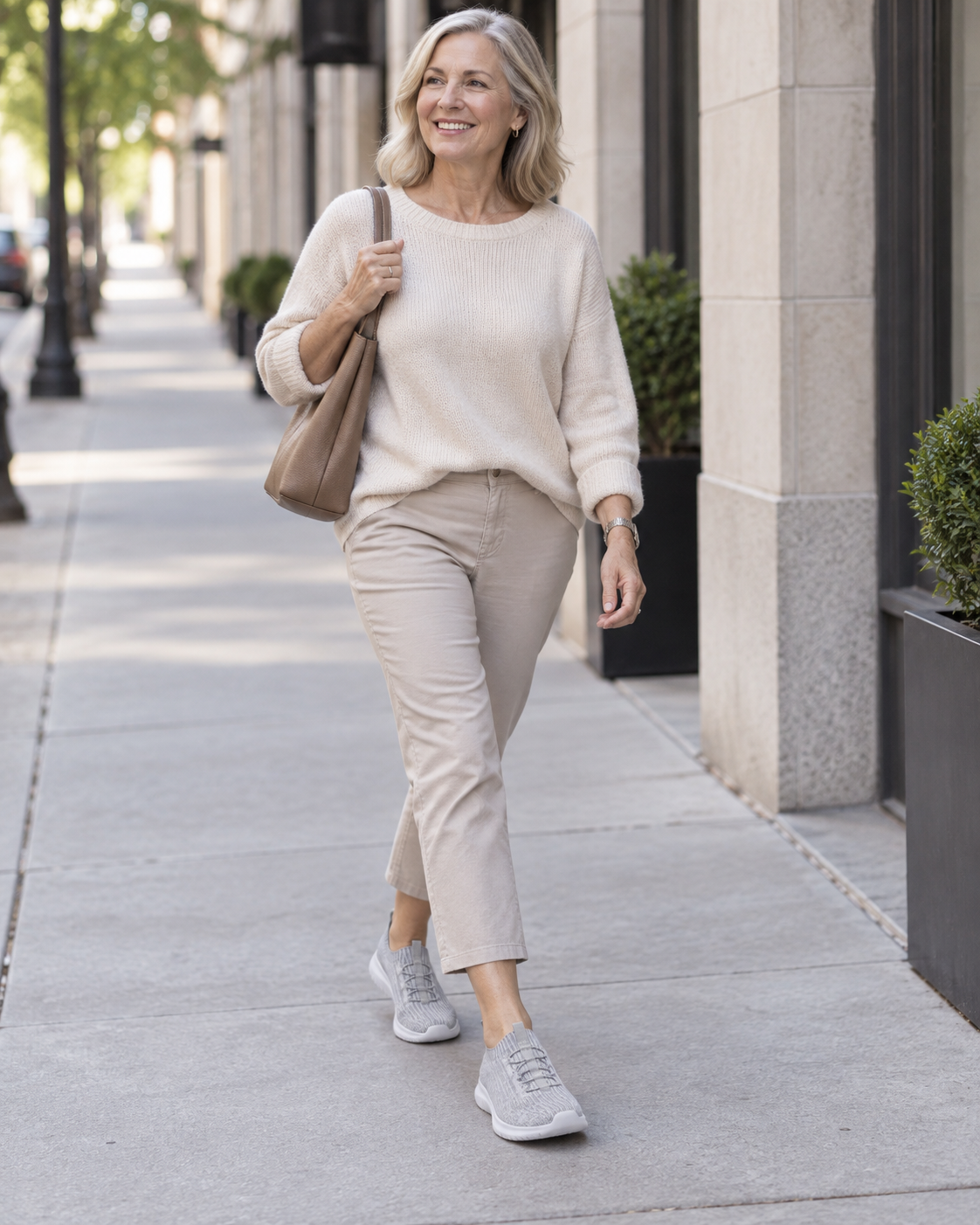
Long flights and car journeys can involve extended sitting, while travel days can also include a surprising amount of walking. A useful travel shoe therefore needs to balance room, flexibility, low weight and easy on-and-off wear.
A stretch upper can feel more forgiving after hours of sitting, while a cushioned lightweight sole can make airport terminals, stations and sightseeing easier on the feet.
If you know your feet tend to feel different after long trips, avoid choosing a travel shoe that already feels tight before you leave.
What Shoes Should You Avoid When Your Feet Feel Swollen?
The exact answer depends on your foot shape and the reason for the swelling, but some constructions are more likely to feel restrictive when foot volume increases.
- Very narrow or sharply tapered toe boxes.
- Rigid uppers that create pressure across the top or sides of the foot.
- Hard seams positioned directly over sensitive areas.
- Straps that cannot be adjusted and already feel tight.
- Shoes that require a painful break-in period before they feel wearable.
- Pairs that fit only when your feet are at their smallest.
Tight shoes do not cause every type of swelling, but they can make swollen or fuller-feeling feet noticeably more uncomfortable.
Can Walking Shoes Reduce Foot Swelling?
A walking shoe should not be presented as a treatment for swelling. The right footwear can provide more space, reduce pressure from a rigid upper and make normal movement feel more comfortable, but it does not address the underlying medical cause of edema.
General measures sometimes recommended by healthcare sources for uncomplicated swelling include gentle movement, avoiding very long periods of sitting or standing, elevating the legs when appropriate and avoiding shoes or clothing that are too tight. Individual advice depends on the cause of the swelling.
If swelling is recurring, worsening or unexplained, speak with a healthcare professional rather than relying on footwear alone.
How to Choose the Right Pair for Your Own Feet
There is no single “best” shoe for every person with swollen feet. The useful question is which combination of features matches the way your feet change and the way you move during the day.
Do your toes feel crowded?
Prioritize forefoot shape and width. A rounder toe area or wide-fit option may be more useful than simply buying a longer shoe.
Does the top of your foot feel tight?
Look for a soft knit, stretch mesh or adjustable upper that can accommodate small changes in volume without concentrated pressure.
Do you stand or walk for many hours?
Add cushioning, low weight and outsole flexibility to your list of priorities.
Do your feet feel warm inside shoes?
Breathable knit or mesh can improve airflow and may create a lighter, less enclosed feel.
Does swelling vary significantly from day to day?
Fit becomes more difficult when foot volume changes a lot. Consider adjustable footwear and discuss persistent or significant swelling with a healthcare professional.
Frequently Asked Questions
What type of shoes are best for swollen feet?
Look for enough toe room, a soft or stretchable upper, a secure heel, lightweight cushioning and an appropriate width. A wide-fit option can be useful when extra forefoot room is needed.
Are knit shoes good for swollen feet?
Knit uppers can feel more adaptable than rigid materials because they can flex around the shape of the foot. They still need to be the correct size and shape for your feet.
Should I size up if my feet swell during the day?
Not automatically. If the main issue is width, a larger size can create excess heel movement. Consider a wider toe shape, stretch upper or true wide-fit option and compare your measurements with the product size guide.
Are wide shoes always better for swollen feet?
No. Some people need extra forefoot width, while others mainly need more room across the top of the foot or a softer upper. The best fit depends on where the pressure occurs.
Can shoes prevent swollen feet from getting worse?
Shoes do not treat the underlying cause of swelling. Comfortable, non-restrictive footwear may reduce pressure and pinching, but persistent or worsening swelling should be medically evaluated.
When should swollen feet be checked by a doctor?
Seek medical advice for unexplained, persistent, worsening, painful or sudden swelling, especially when it affects one leg or is associated with redness, warmth or fever. Chest pain or shortness of breath with swelling requires emergency care.
Give Your Feet a Little More Room
Explore lightweight walking shoes with soft knit uppers, flexible cushioning and options designed for a more comfortable everyday fit.
Explore Walking ShoesHealth Information Sources
This article is for general educational purposes and is not medical advice.
NHS: Swollen ankles, feet and legs (oedema)
MedlinePlus: Foot, leg, and ankle swelling
Mayo Clinic: Foot swelling or leg swelling in adults
0 commentaire